Training Day
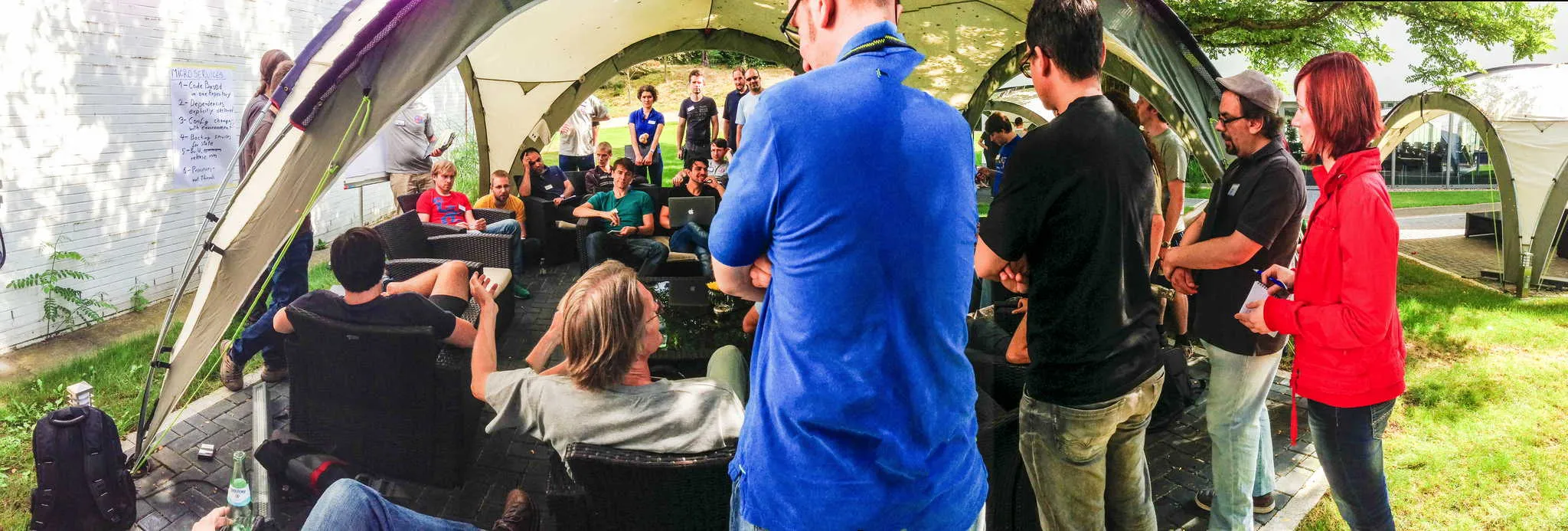
The purpose of the training day is to open up and extend the world of crafting - for newcomers and more experienced people alike. And to provide an easy way to have all the questions you will probably arrive with answered by experienced practitioners.
Unlike the rest of the conference, this day does not follow the OpenSpace format.
Sessions are taught by tenured and distinguished community members with years of practical experience.


If coding with Generative AI sometimes feels brilliant and sometimes frustrating, you're not alone. This workshop maps the patterns that make AI-augmented coding more powerful and predictable, from first experiments to advanced techniques, and gives you space to try them.
We'll move between exploring patterns together and putting them into practice. Along the way, we'll dig into the inherent limitations of Generative AI alongside the new possibilities it creates, examining not just what happens, but why. Understanding these underlying dynamics is what equips you to adapt and combine patterns, and to come up with your own. Real-world examples will show some of these combinations in action.
You'll leave with techniques that aren't tied to any single LLM or coding agent. Practical approaches you can apply immediately, plus the mental models that keep you effective in this rapidly changing landscape.
Lada is a seasoned practitioner of extreme programming, Test-Driven Development, and Domain-Driven Design who transforms complex legacy systems into maintainable architectures through incremental improvement and continuous refactoring.
Her approach pairs deep technical expertise with genuine empathy for both end users and fellow developers, creating resilient systems that truly serve their users. Over the past couple of years, she's been exploring how to bring the same rigor and craft to AI-assisted development, figuring out what it takes to build reliable software when the tools themselves are unreliable.
Lars Eckart is a software developer and technical coach who helps teams and developers improve their coding and testing skills. He is currently helping teams navigate what good software development looks like as coding agents become part of everyday work.
Outside of work, Lars contributes to ApprovalTests.Java and enjoys spending time with his family.

Psychological safety is an area that has had a lot of attention for some years. It is the most important of five characteristics that Google found in high-performing teams. Since they published that result, the amount of material and talks out there has just grown and grown, and it can be hard to get an overview. It can even be hard to tell the quality of the content. On regular basis, I see the misunderstanding that psychological safety is about feeling comfortable. And it is not.
Psychological safety is about feeling safe enough to try things out and speak up, to make mistakes and admit it. And in some situations, it is about feeling safe enough to be uncomfortable. For people to grow and learn, safety is a prerequisite (or makes it a lot easier).
It can be hard to understand what psychological safety actually means, and even harder to relate it the daily lives that we have. Because psychological safety is about how we feel, it can be many different things to different people. I have worked with psychological safety for over 8 years, and I am still learning all the time; come join me and start your learning journey :)
We will start the workshop by looking at definitions and discussing what that means to us, the people in the room. We will look into the difference between being safe and being comfortable, and try things out to get a good understanding.
Please be prepared to actively participate in group settings. This training will require your attention and contribution.
Gitte Klitgaard is an independent consultant, agile coach, leadership coach, trainer, advisor and mentor focusing on helping organizations implement psychological safety, responsibility, and accountability. She does this by working with teams and individuals as well as leadership. Gitte is authentic, she will cut to the chase, and help people become themselves thereby reaching success.
Her community contributions include organizing coach camps, and speaking at conferences, she creates safe and respectful environments at work and outside. She listens to and engages the more silent voices and minority groups. Gitte also contributes to the community by writing blogpost and on Bluesky as she shifted away from Twitter. She wrote a section about team safety in "The Art of Agile Development, 2. edition" by James Shore which was published in 2021.
In her spare time, Gitte collects LEGO and Yodas and keeps in touch with friends from all over the globe including some, she considers her second family.
Gitte is owner of Native Wired and has lead change at companies like IBM, LEGO, and Spotify.
Mail: gitte.klitgaard@yahoo.dk, LinkedIn, Homepage: NativeWired.com

The "Red-Green-Refactor" cycle rolls off the tongue and seems easy to convey. Despite that, Test-Driven Development continues to have extremely low adoption rates among developers. Why is TDD so difficult to learn, let alone master? Join Matt in taking a critical eye towards RGR, examine an alternate model for explaining and teaching TDD, and use incremental, habit-based exercises to create TDD fluency.
Matt helps companies build self-sustaining change at the team and organization levels.
His career started on Intel’s lead microprocessor design team, testing large-scale logic features and building tools and infrastructure for automation. He is a co-author of “The Art of Validation”, an internal reference on the philosophy and methodology of Intel verification teams. He became Intel's first dedicated technical coach as a member of its Emergent Systems and Coaching team, assisting teams with improving process and driving adoption of hardware and software Test-Driven Development practices throughout the company.
Matt firmly believes in the “by doing it, and helping others do it” portion of the Agile Manifesto. He is an advocate and instructor for dedicated practice patterns to hone programming skills, and a global coordinator for the Global Day of Coderetreat movement. Matt resides in Portland, Oregon, where he also instructs and coaches race car drivers and judo competitors.
Email: mplavcan@tacitfocus.com, LinkedIn, Mastodon: @mplavcan@hachyderm.io

Most teams begin system design by describing features — feeds, notifications, dashboards. This feels fast and aligned. But beneath that surface, words carry different meanings, time and state remain implicit, and what looks like agreement often hides real misalignment.
In this hands-on workshop, we start with a simple, familiar design challenge and a set of feature ideas. Then we shift perspective — from outputs to structure.
Time and state are part of every modern system. Many familiar “features” are actually attempts to bridge gaps between these two realities — the system’s evolution and a person’s experience of it.
Participants will experience systems as evolving relationships, not just collections of features — and leave with a practical way to begin designing them that way.
This workshop builds on ideas from my book Learning Systems Thinking and my current work in progress Knowledge Flow. Architecting systems of software is my jam.
Participants will leave with:
Diana Montalion is a systems architect, software engineer, author, and speaker with over two decades of experience designing and evolving complex software systems. She is the author of Learning Systems Thinking (O’Reilly) and currently leads architectural strategy at The Athletic.
Her work focuses on “what needs to change in order to deliver coherent, adaptive systems?” Through her writing, workshops, and the Knowledge Flow project, she teaches practical approaches to architecting systems that learn, evolve, and generate meaningful outcomes over time.
Website: montalion.com Knowledge Flow: knowledgeflow.com Newsletter: systemsrearchitected.com LinkedIn: linkedin.com/in/dianamontalion/
Also check out our history of past training sessions for the kind of amazing sessions we host every year on Training Day!
We welcome practitioners and learners at all levels at SoCraTes - because we believe that sharing, teaching and learning are equally important to the community health, and that this is a fundamental part of what makes SoCraTes the magical place it is. Training Day is intended to build bridges and make it easier to join the community, not to create an extra entry barrier. As a consequence, you can only book a ticket to Training Day as an add-on to the full SoCraTes conference .
Training Day is not part of the regular SoCraTes programme. It requires both extra preparation - especially for the session hosts - and additional cost. As a consequence, you will have to pay a cover charge of ~200€ to attend.

Conference Buddy is for everyone who wants to attend a tech conference but is afraid to go alone.
Find your ConferenceBuddy, or offer to be one in the #buddies Discord channel. Learn more.